History, form, transmission,
and aesthetics in Hindustani music.
A monograph and workshop document on the compressed field of shringara, the ashtang gayaki of Gwalior, and the downstream reach of a form that never built a gharana of its own.
गुरुर्देवो महेश्वरः ।
गुरुः साक्षात् परब्रह्म
तस्मै श्रीगुरवे नमः ॥
The Guru is verily the Supreme Brahman — to that revered Guru, my salutations. To my Gurus — Thakur Sri Ramkrishna Paramhansa, my father Pt. Sharad Sathe, and Pt. Sharadchandra Arolkar Buwa — whose blessings continue to sound in every note.
अनुक्रमContents
- IIOrigins and Etymology07
- IIITappa in the Genre Spectrum11
- ·Ornament-Density Comparison13
- IVMusicological Anatomy of Tappa14
- ·Why Punjabi Theka and Pashto Taal17
- ·Pashto Tappa: A Romantic Short-Poetry Form21
- VIIDownstream Influence30
- ·Influence on Khayal31
- ·Influence on Thumri32
- ·Tap-Ghazal, Bhajan-Pada, and Ashtapadi33
- ·Pt. Kumar Gandharva's Distinctive Contribution33
- ·Influence on Marathi Keertan and Natya-sangeet34
- ·Tappa in Indian Instrumental Music34
- VIIISegmentation by Raga and Nava Rasa35
- ·Empirical Emotion Analysis Across Recorded Renditions38
- ·The 22-Recording Emotion Map40
- ·Appendix: The Convergence Streams41
- IXDocumented Discography for Comparative Listening45
- ·Listening Index — 24 Recordings48
- XDiscussion and Closing Thoughts49
— Abstract —On the compressed field of Tappa
Tappa is a compressed landscape of musical force in which fast curved bols, taans, dense ornamentation, precise laya control, and emotive intensity and its charge are concentrated into a sharply bounded temporal span.
This paper presents an integrated study of Tappa as a distinct yet internally diverse vocal form within Hindustani music, with particular attention to its history, musicological structure, tala preferences, gharana-specific transmission, downstream influence, and contemporary interpretive significance. The study synthesizes archival materials, performance evidence, broadcast pedagogy, secondary scholarship, and the author's practice-based reflections from within the Gwalior lineage.
It argues that Tappa should not be reduced either to a minor semi-classical genre or to a display of technical virtuosity. Rather, Tappa is best understood as a compressed landscape of musical force in which fast curved bols, taans, dense ornamentation, precise laya control, and emotive intensity and its charge are concentrated into a sharply bounded temporal span.
A central interpretive claim of this paper is that bhava in Tappa is not absent because of speed; instead, it is delivered with high intensity but short duration, which can make its emotional force seem less lingering in memory than that of an expansive Khayal. The paper further shows that Tappa's diversity is driven less by raga or rasa breadth than by gharana-specific technique, exponent-specific imagination, and regional adaptation.
Keywords Tappa · Hindustani music · Gwalior gharana · semi-classical vocal music · Punjabi theka · bhava.
On Tappa —
and why it must arrive quickly.
"To me, Tappa is a miniaturised, compressed avatar of Khayal's grandeur. Set at sixty to eighty beats a minute, e.g. in Pashto taal, with the mukhda and asthai completed in a single avartana of seven beats, Tappa does not have the luxury of unfolding slowly, neither does it have the allowance to unfold with blinding speed."
§ 1.1A note from the author
This is Samir Sathe. In authoring my thoughts, insights and reflections on Tappa, I drew on several sources of curated, authentic material, which I further reflected on. I have added my own insights on how Tappa should be understood and further imbibed in daily practice.
With deep reflection, commitment and fervent practice of this rare art form, I think a musician will render himself or herself far better in musicianship and the craft of expressing the kernel of Tappa. I wish all readers, practitioners of music and Tappa, the best of luck and pass on the blessings of my Gurus, Thakur Guru Ramkrishna Paramhansa, my father, Pt. Sharad Sathe and Pt. Sharadchandra Arolkar buwa.
As I reflect further on Tappa, I find myself drawn to describe it in a way that goes beyond technique and lineage alone, because that is genuinely how I have come to experience it after years of practice. To me, Tappa is a miniaturised, compressed avatar of Khayal's grandeur.
There is a simple truth from science that I keep returning to: the same force, applied over a smaller surface, produces a sharper, faster effect — pressure rises precisely because the area has narrowed. Tappa works on my ear and my breath in exactly this way. Set at sixty to eighty beats a minute, e.g. in Pashto taal, with the mukhda and asthai completed in a single avartana of seven beats, and four or five angas of the ashtang gayaki packed into that one cycle, all suffused with shringara rasa, Tappa does not have the luxury of unfolding slowly, neither does it have the allowance to unfold with blinding speed.
It must arrive at the right velocity, and that is exactly why it excites the room and breaks the meditative pace of what came before it. I think of Tappa as a sharp sword or a flash of lightning: it has flash, sharpness, brightness, and an intensity that disrupts, but never at the cost of melody or feeling.
I want to be honest about a misconception I have encountered often, including in my own early training: that Tappa is merely a superior technical mastery over laya and a supple, malleable voice. I no longer believe this is true, or at least not the whole truth. The real ananda, the real joy a listener and a singer share, comes from the emotive content that underscores the technical virtuosity.
Tappa is not technical gymnastics performed for its own sake. It is the ethos of the composition, expressed through a kind of perturbed uneasiness, a restlessness in the melody that mirrors restlessness in the heart, and it is this combination, not speed alone, that creates the magic.
This is why I insist that every serious student needs both technical superiority and emotional maturity to render Tappa effectively. One without the other simply does not work.
I also want to speak candidly about upaj, or improvisation, in Tappa, because I think it is often misunderstood as simply speed. To my mind, upaj in Tappa is really a function of how rapidly one's brain and heart can improvise together. There is no luxury of time to create at leisure, the way there sometimes is in a slow Khayal elaboration. This makes Tappa genuinely challenging for an artist who has not yet made peace with improvisation, because the form does not wait for you to arrive at an idea; you must already be ready.
Finally, I have come to see Khayal and Tappa as two different scales of beauty, and I no longer feel the need to rank one above the other. Khayal is accentuated by amplification: it is expansive and elaborate, and its expressions are often characterised by pauses at exactly the right moments. Tappa, by contrast, is characterised by reductionist movement — it compresses rather than expands.
I see beauty in the large and beauty in the small; I see beauty in the long vision and beauty in the short vision. Khayal is the long vision of beauty, and Tappa is the short vision. Both are necessary in the moments of true musical creativity, and I have tried, in this document, to honour both.
I find it useful, in trying to communicate this to students and scholars alike, to draw a few parallels from outside music entirely — from science, from the fine arts, and from spiritual practice — because these fields have, in their own languages, already described the kind of concentrated intensity I am trying to point to in Tappa.
From science, beyond the pressure-and-area analogy above, I also think of lightning: not diffuse illumination, but a sudden discharge, where potential built up quietly over time is released in one brief, brilliant event. Years of taleem, breath discipline, layakari, and raga-internalisation do not show themselves in Tappa as leisurely exposition; they show themselves as flash. The listener hears not the years of preparation but the radiance of the release. I also think of what is now understood about focused attention: an artist singing Tappa must generate an idea, discard the weak options instantly, and still land precisely back on the mukhda, all without losing structural awareness. Tappa is not merely fast singing; it is rapid cognition under aesthetic pressure.
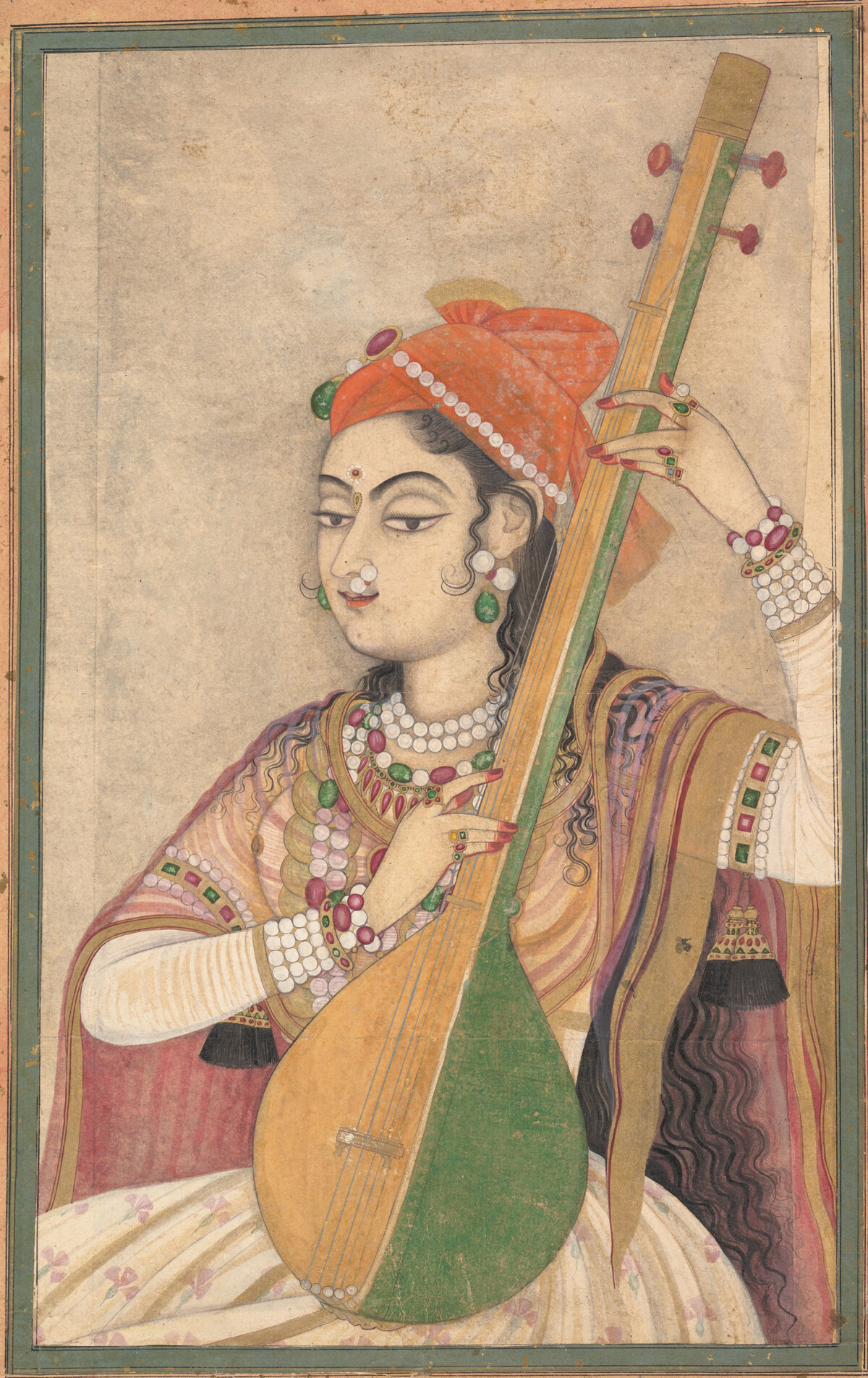
From the fine arts, the nearest parallel I have found is the miniature painting tradition. A miniature does not shrink vision; it refines it. It asks the viewer to come closer, and rewards that closeness with a jewel-like density of line and colour. I feel Tappa works on the ear in the same way: if Khayal is mural-like in its breadth, Tappa is miniature-like in its compression and its intimacy of crafted detail. I think also of the living line in calligraphy and brushwork, where a line can be technically correct yet lifeless, or it can carry an inner continuity that makes it feel alive. A Tappa can likewise be fast and accurate yet empty, or it can carry the same living, breathing intention. What matters, in both cases, is not ornament as display, but ornament as life made audible.
And from spiritual practice, the concept that comes closest to what Tappa demands of a vocalist is ekagrata, or dharana — one-pointed concentration, the gathering of awareness onto a single object without leakage. Tappa is, in this sense, a kind of musical one-pointedness; it cannot afford to wander. I would go so far as to say that if Khayal often resembles an inward reflection, where form gradually reveals itself through unfolding attention, Tappa resembles something closer to a mantra's ignition: concentration, recurrence, and inner heat producing an immediate energetic field. One expands consciousness inward, the other condenses it inward until it shines.
I offer these parallels not as historical claims about how Tappa came to be, but as the most honest language I have found for describing what it actually feels like to sing and to hear.
§ 1.2Objectives of the Document
This document sets out to accomplish six aims across its ten chapters, drawing on archival materials, broadcast pedagogy, an empirical analysis of twenty-two benchmark recordings, and the author's practice-based reflections from within the Gwalior lineage.
- Trace Tappa's documented lineage from Punjabi-Sindhi camel-driver folk song to a codified semi-classical genre, disclosing live historiographic debate where the record is unsettled.
- Articulate the precise musicological features that distinguish Tappa from Khayal, Thumri, and Bhajan — ornament density, tala choice, and the single-avartana architecture of sthayi and antara.
- Map the living Gwalior tradition across three generations of guru-parampara, and compare it structurally against the Banaras, Patiala, Rampur-Sahaswan, Gogate, and Bengali streams.
- Appreciate Tappa's wide downstream influence on and by Bada Khayal (e.g. Tap-Khayal), Chota Khayal, Thumri, Ghazal, Bhajan, Ashtapadi, Marathi Keertan and Natya-sangeet, Bengali music, and instrumental performance.
- Understand, through structured segmentation and an AI-assisted emotion analysis of twenty-two recordings, why Tappa's diversity operates within shringara rasa through exponent-driven nuance rather than through a wide raga or rasa palette.
- Argue for Tappa's restoration to a more central place in concert programming and music-educational curricula — not as Khayal's miniature cousin, but as its concentrated twin.
Origins and etymology.
From tappana — to jump or bounce — mirroring the physical jolts of a camel's gait carried into vocal ornamentation. On Shori Mian, on the disputed dates, and on the century of tappay love songs that likely precede him.
§ 2.1The camel-driver origin
Tappa is a semi-classical vocal genre of Hindustani music, traced by broad scholarly consensus to the folk songs of camel-riders of the Punjab–Sindh region, with the word deriving from Punjabi tappana — to jump or bounce — mirroring the physical jolts of a camel's gait carried into vocal ornamentation.
The genre's classical codification is credited to Mian Ghulam Nabi, known as Shori Mian, son of Ghulam Rasool Khan, a court singer under Nawab Asaf-ud-Daula of Awadh, said to have fused the folk melodies of Punjab–Sindh camel drivers with khyal-trained ornamentation to create this fast, jumping vocal idiom.
Dates for Shori Mian's life are genuinely disputed across the sources I have reviewed — one tradition gives 1742 to 1792, while a peer-reviewed paper drawing on M.R. Gautam's scholarship states he died in 1810, continuing to teach until then — and I prefer to disclose this discrepancy to my audience. A further, alternative etymology, drawn from a 2010 Marathi-language archival transcript recounting Pandit Sharadchandra Arolkar's own recollections, holds that Shori Mian's voice was thin and high-pitched, producing a piercing quality termed 'Shor', which is the actual source of his name — an alternative to the more commonly cited explanation that he took the name from a Shori community or township in Punjab. This is a historiographic uncertainty.
Family tradition holds that Ghulam Nabi's voice was unsuited to formal Khayal, driving him to travel through Punjab and Sindh, absorb the cameleers' idiom, and return with a codified new art form bearing his signature "Shori" embedded in the antara text of his compositions. His direct disciples included Tarachand, Miyan Gammu, and Meer Ali Khan, court singer of Nawab Muhammad Ali Shah of Lucknow.
The same archival source confirms that Shori Mian was a contemporary of Adarang, with a direct reference to Adarang embedded within one of Shori Mian's own antara texts, and situates the resulting curiosity about Tappa within the golden age of Khayal composition around 1748, associated with Sadarang and Adarang.
§ 2.2The Schofield challenge — a century earlier
A minority scholarly view, associated with Mukund Lath, holds that Tappa in fact grew out of Thumri rather than directly from folk song, with Shori Mian himself trained in the Thumri style — a genuinely contested point of origin I present as live historiographic debate rather than settled fact.
More significantly, my own segmentation research surfaces a still sharper challenge to the originator myth: musicologist Katherine Schofield and other scholars contest the Shori Mian origination story entirely, citing seventeenth-century references to tappay love songs in Mughal-era Delhi that predate Shori Mian by roughly a century, suggesting that Tappa's folk roots were absorbed into classical practice rather than singularly invented by any one figure.
I raise this alongside a separate lecture-demonstration tradition I have consulted, which similarly points to a possible mid-17th-century Persian-language reference and a manuscript attributed to a Shah Jahan-era court musician — two independent lines of evidence converging on the same conclusion: that Tappa's documented history very likely extends a century or more before Shori Mian's conventionally cited career. I treat this as a live, unresolved historiographic question rather than folding silently into the Willard–Shori Mian narrative.
Ramkrishna Das's own archival lecture pushes this historiographic question even earlier: citing Chaurasi Vaishnavan Ki Varta, the hagiographic account of Krishnadas Adhikari compiled by Gokulnath (1551–1639), Das dates a documented reference to Khayal and Tappa being sung together by a professional female singer, or patur, in an Agra inn to approximately 1510, a full two centuries before Shori Mian's conventionally cited career, and situates this account within the reign of Gwalior's Raja Man Singh Tomar (1486–1516), the same royal patron credited with elevating Dhrupad (Das, in Bhagwat et al., 2010).
§ 2.3Willard, Saxena, and the propagation from Lucknow
Captain N.A. Willard's late-18th-century European account, published in Music of Hindustan, corroborates the Shori Mian foundational narrative, describing Tappa songs as an admired species formerly sung in a rude style by Punjabi camel riders before Shori Mian refined them into their present elegance, and noting their thematic focus on the love of Heer and Ranjha. I have found this passage corroborated across two separate archival transcripts, which strengthens my confidence in it as a primary historical account, even as the pre-Shori Mian evidence above complicates its framing as an absolute point of origin.
Dr. Ranjana Saxena's independent musicological survey corroborates this pre-Shori Mian timeline from a different documentary angle, noting that Fakirullah, a commander under Aurangzeb, records "tappay" as famous Lahore love songs in his Persian-language treatise Raag Darpan (1666), that his contemporary Mirza Khan uses the cognate term "Dapa" for the same phenomenon in Tuhfat-ul-Hind, and that Gokulnath's own account situates Tappa or Tapp-Khayal singing in the Agra marketplace as early as the sixteenth century (Saxena, 2022).
Shori Mian later moved to Lucknow and propagated Tappa under the patronage of Nawab Asaf-ud-Daula. Having no children of his own, he gave exclusive training to his disciple Gammu Miyan, extending Tappa's reach in the North; his son and disciple Shadi Khan carried the form independently to Banaras, establishing it there alongside Gwalior as one of the only two gharanas historically famous for Tappa — though, as I discuss further in Part 6, Tappa in fact never developed dedicated gharanas of its own in the way Khayal did, and was instead absorbed as a specialised practice within existing gharana structures.
Ramnidhi Gupta is separately documented as having composed Tappa in the Bengali language, known as 'Nidhubabur Tappa', which remains popular in Bengal as a semi-classical song form distinct from the Hindustani mainstream.
Tappa in the genre spectrum.
Dhrupad is a firm step. Khayal, a sportive step. Tappa, a bouncing step. Thumri, an intoxicated step. M.V. Dhond's celebrated etymological observation, and where Tappa stands in the family of Hindustani vocal forms.
§ 3.1The organising principle
Hindustani vocal music divides broadly into a classical tier (Dhrupad, Khayal) and a semi-classical tier (Thumri, Tappa, Bhajan, Ghazal, Dadra). Dhrupad and Khayal are melody-driven, built to exhaustively unfold raga grammar focused on the elaborate expression of the composition; Thumri is poetry-driven, prioritising emotional communication of lyric over raga rigour.
Tappa occupies a genuinely distinct third position: it is neither melody-driven in Khayal's sense nor poetry-driven in Thumri's sense; its organising principle is rhythmic-kinetic, built on taan-velocity and vakra, or curved, melodic athleticism.
M.V. Dhond's celebrated etymological observation is worth foregrounding for a scholarly audience: the names of the four major Hindustani forms encode their characteristic gait — dhrupad ("a firm step"), khayal ("a sportive step"), tappa ("a bouncing step"), and thumri ("an intoxicated step") — with dhrupad classed as masculine dance and khayal, tappa, and thumri as feminine dance.
What has become clearer to me through my own Upaj work, however, is that this "bouncing step" is not merely a rhythmic label; it is the aesthetic signature of a form built to compress creative decision-making itself. In a slow Khayal, the artist can plan a phrase, hold it, revise it silently, and only then release it. Tappa allows no such staging: the brain must generate an idea, the heart must accept or reject it, and the throat must land it — all within one avartana. This near-simultaneous co-firing of cognition and feeling is what I mean when I speak of brain-heart co-activation. Where other forms permit the two faculties to negotiate in sequence, Tappa forces them to fuse.
I have come to see Tappa, therefore, as the sharpest available laboratory in Hindustani music for studying upaj — spontaneous, rule-governed creative production. Everything the form asks of the vocalist — velocity, precision, emotional charge, unbroken continuity — is also what a rigorous inquiry into musical creativity would ask of a research subject. This convergence, between Tappa's inner demands and the questions I hope Upaj will help answer, is not something I noticed at first. It has emerged, over time, from listening to Arolkar Buwa, Baba, and the twenty-two benchmark recordings that anchor Chapter Eight of this monograph.
§ 3.2Ornament-Density Comparison
| Ornament | Dhrupad | Khayal | Thumri | Tappa | Bhajan / Ghazal |
|---|---|---|---|---|---|
| Gamak (melodic range) | Large | Medium–large | Narrow | Narrow | Narrow–medium |
| Meend (glide) | Large | Large | Narrow–medium | Narrow | Narrow–medium |
| Khatka | Seldom | Average | Often | Average | Often |
| Murki | Non-existent | Average | Often | Seldom | Often |
| Gitkiri | Non-existent | Seldom | Often | Often | Average–none |
| Andolita | Occasional | Occasional | Non-existent | Occasional | Non-existent |
Tappa's ornament profile is closer to a stripped, accelerated Khayal than to Thumri's languorous bol-banaav. V.N. Bhatkhande's own 1919 assessment reinforces this, describing Tappa singing as more compact than Dhrupad and Khayal, speedy and light in nature, and useful for expressing lighter moods such as fun, happiness, and romance.
Against Bhajan, the distinction is starker: Bhajan is stanzaic and devotionally text-centred with minimal ornamentation, sharing almost nothing with Tappa's taan-based virtuosity — it is considered improper to apply Tappa's taan-heavy style to devotional Bhajan-pada texts, though rare hybrid examples exist nonetheless, such as a Sanskrit Tappa-ang pada in Kafi ("Vande Nandakumaram") and a Marathi one in Khamaj ("Yaa Bhawanidhituna").
I reject any hierarchy among genres and propose that Tappa is best understood as a distinct form that combines technical mastery with emotional fervour.
The musicological anatomy of Tappa.
Sthayi and antara in a single avartana. The signature zamzama and its Arabic-inflected Chhoot taan. The eight limbs of ashtang gayaki compressed into a single rhythmic cycle. Why pause on any note is considered alien to the form.
§ 4.1The single-avartana architecture
A Tappa composition divides into sthayi and antara, each conventionally completed within a single avartana, or rhythmic cycle — a radical compression compared to Khayal's multi-cycle elaboration. The signature device is the zamzama taan: short, curved, high-velocity phrases moving in continuous vakra motion rather than the straight lines of Khayal; pause or nyas on any note is considered totally alien to the form.
A distinctive secondary device is the Chhoot Taan, carrying a typically Arabic character — starting with a jerk, slowing, then accelerating again — reflecting Tappa's Punjabi folk music's own Arabic undercurrent. Ornamentation stacks jamjama or zamzama, gitakari, khatka, murki, and harakat densely across the text, and the words themselves are deliberately uttered with uneven pace and accent to convey shifting emotional shades — this unevenness is treated as a structural feature, not a defect.
i.The ashtang gayaki, compressed
I find it useful to frame this technical density through the broader ashtang gayaki framework that governs khyal-derived singing more generally, namely alap and behlava, bol-alap, taan, bol-taan, layakari, gamak, meend-soot, and murki-khatka-jamzama. The Gwalior gharana insists that all eight limbs of this apparatus remain well balanced and treats Tappa as a demanding exercise ground for perfecting it.
Within Tappa specifically, these eight limbs manifest in compressed, high-velocity form: zamzama, khatka, and murki dominate over the sustained alap typical of Khayal, since Tappa's single-avartana compression simply disallows the kind of prolonged melodic arc found in Dhrupad or Bada Khayal.
Tappa is explicitly not mere technical acrobatics: the tradition insists on genuine emotional content, delivered through appropriate pronunciation of a lyric centred overwhelmingly on the romantic longing and separation of Hir and Ranjha, or comparable lovers, though V.N. Bhatkhande cautions that eroticism is not compulsory — one can compose Tappa for any mood, so long as it remains unsuited to serious devotional subject matter.
§ 4.2Bhava is not absent — it is brief.
I want to state my own considered position on a long-running pedagogic debate about bhava and speed, because I think it is often misframed. The common view holds that Tappa's velocity makes it structurally incapable of sustaining bhava the way a slow Khayal alap can. I hold a different position: bhava in Tappa is not absent, it is simply brief.
Precisely because the rendition itself is compressed into a single avartana, the emotional charge does not have the leisure to dwell in the listener's memory the way a long-held Khayal phrase does, and this brevity can create the deceptive impression that feeling was never fully present. In fact, I would argue the opposite is true — the emotion is present with full intensity, it is simply not sustained for long enough to register as "lingering" in memory.
A flash of lightning is not less real than a sunset merely because it does not last as long; it is, if anything, more concentrated. The same logic applies to bhava in Tappa: intensity and duration are two separate variables, and Tappa scores highly on the first even where it necessarily scores low on the second. Bhava does not stay — it strikes, and simply leaves.
A further structural clarification, drawn from the 2010 archival transcript, notes that Tappa compositions may be rendered in either madhya laya (medium tempo) or drut laya (fast tempo), a two-tier tempo classification that sits alongside, and should not be confused with, the Gwalior gharana's specific insistence on vilambit or slow tempo discussed below.
The same source records that compositions of Tappa are found especially in ragas such as Bhairavi, Kafi, Gara, Jhinjhoti, Khamaj, Tilang, Barkha, Gauri, Kalingda, and Des, with a smaller number in Yaman and Sindhura, and confirms that Tappa is primarily associated with shringara rasa, the sentiment of love and romance — a point I return to and quantify further in Part 8.
§ 4.3Why Punjabi Theka and Pashto Taal
A dedicated musicological probe I have relied on answers precisely why Gwalior tappas resist the mainstream khayal talas. In Teentaal, the strong khaali on beat 9 is a structural and emotional event — the singer uses it to create tension-and-release, to breathe, and to set up resolution back to sam. Tappa's melodic logic works in direct opposition: its zamzama-driven taans form a continuous cascade that deliberately overrides bar lines and beat accents, building long sweeps broken unexpectedly into rapid ornamental figures resolving off the expected point. Set against Teentaal's strong khaali, this produces an irresolvable structural tension.
Ektaal presents a more nuanced picture. In the Gwalior and mainstream Hindustani traditions, its meditative subdivision — designed for the grandest, most contemplative Bada Khayal — sits at a temperamental distance from Tappa's urgent, volatile shringara-rasa character. However, Dr. Ranjana Saxena's musicological study of Nidhu Babu's Bengali Tappa documents that most of Nidhu Babu's compositions are set to Tri Taal and Ek Taal, establishing Ektaal as a genuine and well-used tala in the Bengali tradition of Tappa (Saxena, 2022). The distinction, therefore, is regional: Ektaal is largely avoided in the Gwalior and North Indian mainstream, but is a documented tala of choice in the softer, more lyric-forward Bengali Tappa of the Nidhu Babu lineage.
Punjabi Theka, also called Sitarkhani, or in some regional usage Addha Taal, solves this: though it shares Teentaal's 16-beat, 3-taali/1-khaali clap architecture, its theka bols differ, producing a swinging, lilting quality that gives the melody room to arc and dive without the tabla's architecture fighting it.
Pashto Taal solves the same problem more radically: its asymmetric 7-beat, 3+2+2 structure carries either no khaali at all or, per a differing source, only one khaali on beat 6 — a genuine discrepancy in the tabla literature I disclose rather than resolve artificially — but both accounts agree its character is relentlessly forward-driving, with a built-in syncopation mirroring Tappa's own melodic refusal to settle.
Dr. Chaitanya Kunte's musicological survey corroborates this tala family precisely, listing Punjabi, Pashto, Sitarkhani, and Roopak as the taals popularly practised for Tappa. The 2010 archival transcript widens this list slightly, naming Punjabi, Addha, Pashto, and Teentaal as the talas most used.
The Gwalior gharana holds the strictest documented position of any lineage: Tappas are set to Vilambit, or slow, Punjabi Theka, and no other tal or laya is allowed to accompany Tappas; the singer, after taking the mukhda, should complete the sthayee and antara in one cycle or avartan. This vilambit tempo is pedagogically exacting, giving the singer just enough time within each beat to execute rapid zamzamas clearly while completing sthayi and antara in a single avartana.
Gwalior's aesthetic philosophy compounds this: because Gwalior singers were foundationally trained in the architecturally rigorous Dhrupad and Khayal, they consciously restrained Tappa's natural flamboyance when they absorbed it, bringing vilambit tempo, circuitousness, short and agile tanas, careful arrangement of words, and completion of the sthayi in a single rhythmic cycle. This rule is credited to the three pioneering masters — Haddu Khan, Hassu Khan, and Natthu Khan.
| Attribute | Teentaal (16) | Ektaal (12) | Punjabi/Sitarkhani (16) | Pashto Taal (7) |
|---|---|---|---|---|
| Subdivision | 4+4+4+4 | 2+2+2+2+2+2 | 4+4+4+4 (diff. bols) | 3+2+2 |
| Khaali | Yes, beat 9, strong | Yes, beat 7 | Beat 9, softer theka | Absent or minimal (disputed) |
| Primary use | Khayal (classical) | Bada Khayal | Thumri, Tappa, light classical | Tappa, folk, semi-classical |
| Rhythmic character | Architecturally square | Meditative, circular | Flowing, lilting, swinging | Energetic, syncopated, driving |
| Suited to Tappa? | Yes, if largely in Addha | Yes, mostly found in the Bengali tradition of Tappa by Nidhu Babu | Yes — rolls with contour | Yes — near-continuous forward drive |
§ 4.4The tabla, the language, and the transmission route
A separate 16-beat Tappa Taal, with a clap pattern identical to Teentaal but distinct theka bols, also exists in the tabla repertoire. The Dev ji Bua account offers pedagogical evidence that the Punjabi-tala-and-language bond is deliberate discipline: directed by Hassu Khan to specialise in Tappa, and later continuing under Haddu Khan, Dev ji Bua travelled to study both the tala and the language's prosodic demands at the source, later founding the Gogate-lineage Tappa tradition central to Maharashtra's practice of the form.
The 2010 archival source independently names Devjibuba of Dhar as the specific conduit who learned Tappa in Lucknow and personally transmitted it to Shankar Pandit and Eknath Pandit of Gwalior — a minor discrepancy in the pedagogical-journey narrative (Lucknow versus Punjab as the site of study) I disclose rather than silently merge.
The same source records a direct comparative judgement, attributed to Pandit Arolkar himself, that in the Tappa sung in Gwalior, the component of Khayal is found more, whereas in Banaras, that of Thumri is found — a judgement my own segmentation work reaffirms in Part 5 through the differential weighting of the ashtang gayaki's eight limbs across these two gharanas.
Ramkrishna Das's own genealogical lecture offers the most granular documented account available of how Tappa passed into Gwalior hands, and I present it here as a further, largely independent corroboration of the Devjibuba route. Drawing on the Oxford Encyclopaedia of Indian Music and on the writings of Tembe and Deodhar, Das traces Ramkrishnabuwa Vaze, known as Devji Bawa (1798–1878), to Sardar Hussain Khan of Bhitto and Mulla Khan of Jhansi, from whom he learned Tappa in the 1820s, before travelling to Gwalior in the 1840s to learn Khayal from Hassu Khan, who agreed to teach him on condition that Devji Bawa reciprocally impart Dhrupad and Tappa training to Hassu Khan's son, Gule Imam, also known as Nathu Khan (Das, in Bhagwat et al., 2010).
Balakrishnabuwa Ichalkaranjikar (1849–1926) and Krishnarao Shankar Pandit's father Shankar Pandit (1863–1917) are recorded as having travelled to Dhar specifically to learn Tappa from Devji Bawa, closing the documented chain from Shori Mian's Lucknow circle through to the Gwalior Pandit lineage discussed above (Das, in Bhagwat et al., 2010).
Das further reconstructs, while explicitly flagging it as informed conjecture rather than settled fact, the family relationships behind Haddu Khan and Hassu Khan: citing Pandit Sharadchandra Arolkar's own account, transmitted through Arolkar's teacher Eknath Pandit, a direct disciple of Haddu Khan, Das proposes that Haddu and Hassu Khan were sons of Amir Bakhsh, and Nathu Khan the son of Karim Bakhsh, two brothers from Hussainpur near Delhi who married into the family of Nathan Pir Bakhsh, court musician of Gwalior; following a fatal altercation in Lucknow involving the rival Qawwal Bachche lineage of Bare Muhammad Khan, Nathan Pir Bakhsh is said to have rescued his young grandsons by bringing them to the safety of Gwalior, where the Tappa tradition subsequently took root (Das, in Bhagwat et al., 2010).
Das dates Shori Mian's death to approximately 1803–1810 and notes that Haddu and Hassu Khan, born after this date, could only have received Tappa training indirectly through Shori Mian's own disciples rather than from the originator himself, a genealogical detail that sharpens without resolving the broader dating uncertainty already discussed in Chapter Two above.
ii.Ornaments, precisely defined
The 2010 archival transcript offers unusually precise, teachable definitions of Tappa's core ornaments, which I find valuable for a scholarly audience expecting technical rigour rather than impressionistic description.
- Murki
- A swift, delicate micro-ornament forming a semi-circular contour of three notes executed cleanly within a single breath or short stroke (for example, Re–Ni–Sa), inherently rounder and softer than sharper ornaments.
- Khatka
- A highly accented, sharp vocal flick. Unlike Murki's rolling nature, a Khatka strikes a main target note, bounces rapidly to neighbouring notes above and below to complete a distinct, fast geometric loop, and locks instantaneously back onto the base note (for example, Re–Sa–Ni–Sa).
- Zamzama
- The structural foundation of the signature Tappa 'tana' phrasing, consisting of a continuous, unbroken cascade of inverted mordents or zigzag note-pairs executed in a rapid, purposefully jerky, step-by-step manner.
- Mukhda management
- Landing precisely back onto the first beat of the mukhda after a complete, fast-spinning cycle is named explicitly as the single pinnacle of structural mastery for a Tappa vocalist, directly corroborating the compulsory single-avartana completion rule documented in the Gwalior tradition.
§ 4.5Pashto Tappa: a romantic short-poetry form
It is worth pausing on the word "Pashto" itself, since the musical tala and the literary genre it names are historically entangled. Independent of its role as a Hindustani rhythmic cycle, Pashto tappa (Pashto: ټپه) is one of the oldest and most widely loved genres of Pashto oral poetry, described by the scholar Rajwali Shah Khattak as a two-line composition of unequal meter, the first line of roughly nine syllables and the second of roughly thirteen, sung by labourers, peasants, women, and children alike, at moments of both grief and celebration (Learn Pashto, 2007).
Traditionally performed unaccompanied or with the rabab and mangay, and said to admit as many as sixteen distinct melodic models, the Pashto tappa distils a complete emotional observation, often a lover's longing, a mother's tenderness, or a fighter's pride, into a single couplet, in the same way that the Hindustani Tappa compresses an entire shringara narrative into one avartana (Learn Pashto, 2007).
This shared aesthetic of maximal emotional density within minimal textual and temporal space is, I believe, more than a coincidence of nomenclature: both traditions independently arrived at brevity as a vehicle for intensity, one in spoken verse and the other in sung melisma, and the historical borrowing of the name "Pashto" for the seven-beat Hindustani tala likely reflects a felt kinship between the two forms' compressed expressive logic rather than a literal musical transposition.
The living Gwalior tradition.
From Peer Baksh through the three generations of the Pandit family, Arolkar Buwa, and two generations of the Sathe family — unbroken generations of guru-parampara.
§ 5.1The Peer Baksh line and the Pandit family
Tappa entered Gwalior practice through the Peer Baksh lineage; Natthan Peer Baksh's grandson-disciples Haddu Khan, Hassu Khan, and Natthu Khan are the documented founders of Gwalior's disciplined Tappa practice, and Bade Nissar Hussain Khan subsequently taught Krishnrao Shankar Pandit and his brother Eknath Pandit, founding the Pandit family lineage.
Pandit Sharadchandra Arolkar (1912–1994), trained under Krishnrao Shankar Pandit, Eknath Pandit, and the beenkar Krishnrao Mulye, held a repertoire of roughly six hundred bandishes spanning dhrupad, khayal, tappa, thumri, and dadra, and was highly acclaimed for his renditions of Tappas, including his own eleven-minute Bhairavi tappa "Lalvala" set in Punjabi Theka.
My guru, Pandit Sharad Sathe (1932–2019), began training under Arolkar after 1966, continuing until Arolkar's death in 1994, and is confirmed across multiple independent press sources as one of the seniormost surviving exponents of the full, unabridged Gwalior idiom. A 1976 Doordarshan broadcast documents him performing both tappa and tap-Khayal alongside Thumri specialist Sarla Bhide, who performed a parallel tap-thumri in the same programme.
Scroll.in's dedicated feature on Raga Khamaj places Sharadji's own Khamaj tappa, set to the seven-matra Pashto taal, directly alongside the same composition as rendered by his guru Arolkar. A separate Scroll.in feature on Tappa in raag Bhairavi documents comparative renditions by multiple exponents across gharanas, including Siddheshwari Devi of Banaras and Sharadji of Gwalior.
Musicologist Deepak Raja's assessment of Sharad Sathe, echoed by Pandit Ulhas Kashalkar, following Sharadji's passing, notes that Sathe was perhaps the only musician left who could render khayal music in the full-blooded Gwalior style, specifically praised as a master at presenting typical Gwalior forms such as the tarana and tappa.
§ 5.2Multi-generational Sanskar
I see myself as continuing this specific line today, closing an unbroken three-generation audio record from Arolkar through Baba (Sharadji) to the present. This Gwalior stream is, in my assessment, unusually well documented compared to other tappa lineages: it offers a rare three-generation guru-parampara anchored in named, timed, comparative recordings across Khamaj, Bhairavi, and Punjabi Theka or Pashto taal settings, a stronger evidentiary base than most other tappa lineages can currently offer.
A parallel and independently well-documented Gwalior stream runs through Vidushi Neela Bhagwat, who studied Tappa under two teachers in succession: Pandit Sharadchandra Arolkar, and, specifically to access traditional compositions she could not learn from Arolkar, under Pandit Jal K. Balaporia (1917–2013), a Parsi vocalist of the Gwalior gharana whose recorded Tappa renditions, alongside those of Rasoolan Bai and Arolkar himself, are documented in Scroll.in's own comparative feature on tabla accompaniment for Tappa (Pradhan, n.d.; en.wikipedia.org, Neela Bhagwat).
Balaporia, born into Mumbai's small but historically significant Parsi community of Hindustani classical practitioners alongside the Kirana vocalist Firoz Dastur, is recorded by Aban Mistry's community history as one of the most accomplished Gwalior exponents of his generation, and a 1976-era Films Division short credits him, together with his disciple Neela Bhagwat on vocals and Pandit Anant Kunte on sarangi, for its Gwalior gharana music (Mistry, as cited in Mumbai Mirror, 2017; Films Division archival credits, n.d.).
Neela Bhagwat's own lecture on Tappa, delivered as part of a broadcast series alongside Ramkrishna Das and Dr. Anita Sen, offers one of the clearest extant pedagogical accounts of the form's etymology and technique: she traces "Tappa" to the root "Tapp," meaning "suddenly," and demonstrates on air three distinct alankar patterns characteristic of Tappa ornamentation alongside a sapat tan and a fragmentary chained-tan pattern, while also noting that Siddheshwari Devi of Banaras rendered a rare Tappa in Raga Adana Bahar, a raga not otherwise associated with Thumri or Tappa repertoire, and that Bare Balakrishnabuwa of Gwalior composed Jayadev's Ashtapadi in Tappa style, corroborating the same hybridisation documented independently in Part 6 below (Bhagwat, in Bhagwat et al., 2010).
This distinction between intensity and duration is, I believe, exactly what one hears in the finest recorded Gwalior tappas across three generations: the bhava strikes cleanly within the single avartana and is gone, yet no discerning listener who has heard Arolkar, Sharadji, or a well-trained disciple render a Bhairavi or Khamaj tappa would say the feeling was thin or absent — only that it passed quickly, the way all genuinely intense experience tends to.
Comparative streams.
Banaras, Patiala, Rampur-Sahaswan, the Puchhawale line, and the softer Bengali Tappa of Nidhu Babu. A map of the gharanas that absorbed a form which never built a gharana of its own.
§ 6.1The Banaras stream
Tappa also flourished independently in the Banaras gharana; the Prasiddhu-Manohar duo is recorded as having trained directly under Shori Mian for seven years, and Siddheshwari Devi, Rasoolan Bai, and Girija Devi carried the Banaras Tappa tradition forward in the 20th century, all also renowned for Thumri. The 2010 archival source additionally names Bade Ramdas Ji, alongside Badi Motibai, as important 20th-century Banaras exponents of Tappa.
My own segmentation work confirms that the Banaras stream absorbed Tappa through its thumri-dominant, purab-ang sensibility, favouring the sixteen-matra Sitarkhani or Addha taal and frequently blending Tappa with Khayal into the hybrid tapkhayal form; Girija Devi's tapkhayal in raag Yaman is a well-documented illustration of this hybridisation, bringing a steady, architecturally disciplined ascent and elongated meend to a form that in Gwalior hands is treated with far greater rhythmic restraint.
Gamun Mian, Shori Mian's principal disciple, is credited with carrying Tappa specifically to Banaras, and his son Shadi Khan, a court musician under Raja Udit Narayan Singh, consolidated the tradition there; the modern Banaras lineage descends through Girija Devi to her disciple Debapriya Adhikary, who has emerged as the most visible contemporary torchbearer of Benarasi Tappa, having mastered all four documented baans, or technical streams, of Tappa execution: laari daar, guthaao daar, khudi daar, and phande daar (Hassan, 2023, in Bibliolore).
Adhikary, who performs with his cousin and musical partner, sitarist Samanwaya Sarkar, one of the few contemporary instrumentalists able to render Tappa faithfully, credits Girija Devi with teaching him to balance vocal athleticism against the text's inherent prosody rather than allowing oscillation to overwhelm it, and distinguishes Benarasi practice from Gwalior by noting that tappa singing tolerates no nyas, or resting, on any single note, making it a "tireless, intricate pursuit of passionate beauty" (Adhikary, as cited in Hassan, 2023).
§ 6.2Patiala and further streams
A further stream worth foregrounding for this audience is Patiala, epitomised by Ustad Bade Ghulam Ali Khan and continued into the present by Pt. Ajoy Chakraborty, distinguished for exceptionally fast, intricate, and ornamentally dense taans; several commentators consider this the leading contemporary tradition for sheer Tappa virtuosity, a useful counterpoint to Gwalior's restrained aesthetic.
Smaller streams — namely Rampur-Sahaswan, associated with Buniyad Hussain and Shanno Khurana — apply a khyal-adjacent restraint to Tappa taans, rounding out a lineage map that, alongside Gwalior, Banaras, and Patiala, constitutes the fullest documented picture of how this form was cultivated.
Cross-referencing this lineage against the roster of gurus currently affiliated with the ITC Sangeet Research Academy, Pandit Ajoy Chakraborty stands out as the only ITC SRA-affiliated vocalist for whom a documented Tappa association could be verified in the sources reviewed for this paper; other ITC SRA gurus consulted, while accomplished across Khayal, Thumri, Dadra, and allied semi-classical forms, do not appear in the tappa-specific discography, lecture, or lineage record surveyed here, and no claim of their engagement with the form should be inferred from their institutional association alone (ITC Sangeet Research Academy, 2025; itcsra.org).
i.The Puchhawale–Rajurkar line
A separate, comparative Gwalior stream runs through Rajabhaiya Poochwale (1882–1956), renowned for Taan-Malika, whose disciple Govindrao Rajurkar transmitted the tradition to Malini Rajurkar, who became, from the 1960s and 70s onward, the artist most credited with popularising Tappa among general audiences, earning her the informal title Queen of Tappa. Critical writing repeatedly singles her out for an almost mathematical command of taan geometry, producing unpredictable, odd-shaped taans and pounding accents.
Kunte's survey adds Balasaheb Puchhawale, Kalpana Zokarkar, and Shashwati Mandal as continuing this specific Puchhawale-lineage Tappa tradition. Shashwati Mandal has since emerged as one of the most active documented performers continuing this specific Puchhawale-Rajurkar lineage into the present generation, with a substantial recorded repertoire spanning Bhairavi ("Laalwala Joban," "Dil Baharen Da"), Kafi ("Bazm-e-Khaas," "O Miya Jaanewale"), Khamaj ("Bhanda Ve Mehboob Piyara," "Chaal Pahchani"), Kaalingada-Bhairav ("Sukhada Sukhada Sajan Jaave"), Sohini ("Vari Ve Sohavana"), and Brindabani Sarang ("Chora Chammeda"), together with a recorded dialogue specifically addressing Tappa pedagogy, making her repertoire one of the more thoroughly documented among currently active Gwalior-stream Tappa exponents (archival YouTube discography, n.d.).
§ 6.3The Bengali stream — Nidhu Babu and after
Bengal developed a structurally distinct tradition. Tappa arrived in Bengal near the end of the 18th century; Kali Mirza, or Kalidas Chattopadhyay (1750–1826), is credited as the pioneer who travelled to Banaras, Delhi, and Lucknow to learn Khayal and Tappa before adapting it into a softer, more alliterative Bengali form, while Ramnidhi Gupta, known as Nidhu Babu (1741–1839), is credited with popularising the genre widely as Nidhubabur Tappa.
Neela Bhagwat's own lecture on the form places Nidhu Babu's formative encounter with Tappa specifically in 1739, when he travelled to Chhapra in present-day Bihar and heard the Punjabi and Pashto tappas circulating there; drawing on this exposure, he composed original Tappas in Bengali and also rendered Shori Mian's own Punjabi compositions in Bengali translation, embedding Sanskritic vocabulary that gave the form a distinctly more literary register than its Hindustani counterpart (Bhagwat, in Bhagwat et al., 2010).
Among Nidhu Babu's direct followers, Dasharathi Ray, known as Dashu Babu, is the most celebrated, and the wider circle of Bengali Tappa composers documented in this lineage includes Horu Thakur, Kali Mirza himself, Sridhar Kathak, Nilakantha Mukhopadhyay, the Shakta poet-composer Ramprasad Sen, and, in a much later generation, Rabindranath Tagore, whose Rabindra-sangeet absorbed Nidhu Babu's Tappa-ang directly (Bhagwat, in Bhagwat et al., 2010).
Bengali Tappa is explicitly documented as devoid of the fast tanayyat, khatka, murki, rerak, khadda, fanda, and zamzama that define Shori Mian's original style — it is instead of medium tempo, with slow, undulated melodic patterns designed to unveil lyrical mood rather than display taan-virtuosity, and drawing predominantly on mishra-ragas rather than the lighter ragas favoured in the Hindustani mainstream. Shridhar Kathak (b. 1816) further elevated Bengali Tappa's poetic sophistication, and the genre subsequently influenced Rabindra-sangeet, Brahma-sangeet, Svadesigana, and Nazrulgiti.
Ramkrishna Das's genealogical account offers a further layer of nuance on Bengal's relationship to Tappa, noting the existence of an allied, once-controversial devotional song form called Dhap Kirtan, composed by followers of Chaitanya Mahaprabhu, whose mundane-love thematic content drew censure in the nineteenth and twentieth centuries even as its melodic vocabulary overlapped with Tappa's ornamental idiom; Das further observes that a Tappa-like zamzama pattern he demonstrates vocally in his lecture is recognisable in Bengal's own melodic memory and may, in his assessment, be a readjusted import from the Gwalior stream rather than an independent Bengali invention (Das, in Bhagwat et al., 2010).
§ 6.4Comparative table of streams
| Gharana / Stream | Founding / Key Tappa Figures | Distinguishing Technical Trait |
|---|---|---|
| Gwalior | Haddu–Hassu–Natthu Khan (via Peer Baksh); Krishnarao Shankar Pandit; Arolkar; Sharad Sathe | Disciplined vilambit Punjabi Theka or Pashto Taal; single-avartan sthayi-antara closure; Ashtang in compressed form |
| Banaras (Mishra) | Shadi Khan; Prasiddhu-Manohar; Siddheshwari Devi; Rasoolan Bai; Girija Devi | Sitarkhani or Addha taal; tapkhayal hybridisation; purab-ang lyricism |
| Patiala | Bade Ghulam Ali Khan; Ajoy Chakraborty | Fast, intricate, highly ornamented taans |
| Rampur-Sahaswan | Buniyad Hussain; Shanno Khurana | Khyal-adjacent restraint applied to Tappa taans |
| Gogate (Maharashtra) | Dev ji Bua; Lal ji Bua | Regional Maharashtrian adaptation of Gwalior technique |
| Structural Metric | Gwalior · Khayal-Ang | Banaras · Thumri-Ang |
|---|---|---|
| Primary influence | Dominated by the architecture of rigorous Khayal | Derived from the emotional romanticism of Thumri |
| Vocal architecture | Broad octave leaps; mathematical precision; crisp micro-tone definition | Smooth, continuous, highly fluid transitions between note clusters |
| Rhythmic ethos | Strongly anchored in technical rhythmic interplay (layakari) | Focused on deep emotional nuance and lyrical interpretation (artha-bhav) |
| Hybrid legacy | Integrated jerky ornaments directly into grand classical structures to invent the Tap-Khayal | Softened the rough edges of original Punjabi folk tunes into highly expressive semi-classical music |
The downstream influence.
Tappa never built dedicated gharanas of its own. Instead its ornamental grammar was continuously re-exported — into Khayal, Thumri, Ghazal, Ashtapadi, Marathi Keertan, Natya-sangeet, and instrumental music alike.
§ 7.1A form that never built a gharana
This section draws primarily on Dr. Chaitanya Kunte's comprehensive survey, and I use it here to give the readers the widest possible view of Tappa's structural reach across Indian music. It is worth stating plainly, before going further, a structural finding my own segmentation work brought into sharper focus: Tappa never developed dedicated gharanas of its own in the manner Khayal did. Instead, it was absorbed as a specialised practice within existing gharana structures, cultivated with markedly different aesthetics by Gwalior, Banaras, Patiala, Rampur, and the Gogate stream, as set out in Chapter Six.
i.Influence on Khayal
Several musicologists argue that Khayal itself absorbed distinct alankars from surrounding genres — meend and gamak from Dhrupad, bol-bant from Thumri, and taan specifically from Tappa. In Gwalior, Rampur-Sehswan, Patiala, and Banaras gharanas, a recognisable Tappa-ang Taan-phirat appears within Khayal's raga-unfolding process, producing two named hybrid categories: Tappedar Bandish, a Tappa-inflected composition in medium or fast tempo, and Tap-Khayal, the same influence in slow tempo.
Documented Tap-Khayal examples include "Miyaan Suna Ja" and "Dholan Mande Ja" in Bilawal, "Tanu Manu Joban Da" in Bhoop, "Tum To Ho Saheb" in Yaman Kalyan, and Acharya S.N. Ratanjankar's "Jag Rahe Sagari Ratiyan" in Hameer.
A related hybrid, Tap-Tarana, or Tap-Khayal-Tarana, blends Tappa's swift phrasing with Tarana's characteristic syllables, typically set in Addha Tritaal. A separate lecture-demonstration source I have consulted corroborates this cross-pollination, placing the entry of taan-phirat into Khayal singing toward the end of the nineteenth century, broadly consistent with the timeline implied by this documented Tap-Khayal genealogy. An example of this can be found in "Yalali Yala La" in Yaman, where the mukhda is supposed to be sung in 3/4th matra of Pashto taal — it has Persian antara too.
§ 7.2Influence on Thumri
Because Tappa and Thumri share ragas and many ornamentation techniques, and because both genres flourished equally in Lucknow, cross-pollination was inevitable, producing recognisable Tappa phrases within Lucknowi Thumri. In Banaras, Siddheshwari Devi, trained in Dhrupad, Khayal, Thumri, and Tappa under Bade Ramdasji and Saadhu Mishra, carried clear Tappa influence into her Thumri singing, a trait shared by her contemporary Girija Devi.
In Punjabi Thumri specifically, bol-banav is documented as directly influenced by local folk forms including Tappa, Heer, and Mahiya, producing small khatkedar taans, kan, murki, and unexpected melodic curves identical to Tappa technique. This intermixture produced the hybrid genre Tap-Thumri, especially practised in Banaras, Gwalior, and Patiala.
Dr. Anita Sen's own broadcast lecture, delivered as the concluding episode of the same ten-part series featuring Ramkrishna Das and Neela Bhagwat, addresses this Tappa–Thumri relationship directly from a practitioner's vantage point, arguing that Tappa functions as disciplined preparatory training for Thumri: its rigorous grammar of lyric, punctuation, cadence, progression, taan, and murki, she suggests, disciplines and protects a singer's vocal technique much as a security force protects its charge, and old masters accordingly taught Tappa to students specifically to cultivate the vocal agility that Thumri's freer bol-banav later calls upon (Sen, in Bhagwat et al., 2010).
She illustrates the point by demonstrating how a Tappa's taans and murkis can be folded directly into a Dadra or Thumri rendition, and extends the same logic to Hori, observing that a skilled artist may draw aalap and elaboration from Khayal, layakari from Dhrupad, and exuberance from folk song, treating Thumri as a composite art assembled, in her words, the way a jeweller adorns a beautiful woman with ornaments drawn from many sources (Sen, in Bhagwat et al., 2010).
§ 7.3Tap-Ghazal, Tappa-ang Bhajan-Pada, and Ashtapadi
A documented Tap-Ghazal tradition exists, applying Tappa's taan-ornamentation to Urdu ghazal poetry. Most strikingly for a scholarly audience, the Ashtapadi genre — heavy Sanskrit poetry composed by the medieval poet-musician Jayadev — is documented as sung in Tappa style specifically within the Gwalior gharana: evidence of Tappa's technical vocabulary penetrating even the gharana's most classically serious devotional repertoire, and, as I note in Chapter Eight, a rare instance of the form's technical vocabulary carrying beyond its dominant Shringara association.
It is worth noting for discussion that a separate devotional application of the Tappa idiom, in Shia elegiac and martial commemorative poetry associated with Karbala, has also been documented in the wider literature I have surveyed, which further widens the religious and cultural reach of the Tappa-ang beyond the Hindu devotional forms catalogued here.
ii.Pandit Kumar Gandharva's distinctive contribution
Kumar Gandharva, trained in Tappa by veteran Gwalior singers Prof. B.R. Deodhar and Rajabhaiya Poochwale, composed original Tappas in both Punjabi and the regional Malawi dialect, reflecting his residence in Dewas, Madhya Pradesh. His own Khayal bandishes carry audible Tappa influence, and he even composed Tap-Taranas in Mishra Bihag and Mishra Kafi, extending to Tappa-influenced Bhajans on texts by Kabir and Tukaram.
§ 7.4Marathi Keertan and Natya-sangeet
During the Peshwa era, numerous Maharashtrian Keertankar-family musicians travelled to Gwalior to learn Hindustani art music, absorbing Tappa alongside Khayal. Narayanbua Gogte Phaltankar, son of the noted Tappa singer Ravajibuwa Gogte, was a professional Keertankar who sang Tappa-style within his religious recitations. Annasaheb Kirloskar's celebrated composition from Sangeet Soubhadra shows clear, direct Tappa influence. This influence gradually receded as Khayal, Poorbi Thumri, and Ghazal came to dominate.
I have composed a few Tappas in Marathi, in Des, Yaman, and some other ragas, and I am in the process of composing a few more.
§ 7.5Tappa in Indian instrumental music
Tappa is fundamentally a vocal genre, and very few instrumentalists have attempted it, since the taan-phirat central to the form is considered difficult for instruments other than the sarangi. The two artists credited with genuinely developing Tappa as an instrumental idiom are sitarist Pandit Budhhaditya Mukherji and harmonium virtuoso Dr. Arvind Thatte. Santoor player Ulhas Bapat has also more recently attempted Tappa on his instrument.
Segmentation by raga and nava rasa.
A monochromatic palette of ragas; a near-monochromatic rasa. Why Tappa's diversity is not a wide palette of raga-driven or rasa-driven, but within shringara rasa more nuanced through the shades of emotion — only elevated by the sheer capacity of the exponent-driven, as what the trained artificial intelligence algorithm detects, unbiased from the influences of artists' subjective opinions.
§ 8.1The narrow palette of Khamaj-family ragas
In building out my own segmentation of the tappa multimedia corpus, I found it useful to examine the tradition along two further axes not fully addressed above: raga selection and nava rasa depiction. Tappa's raga selection is narrower and more functionally determined than Khayal's, gravitating toward ragas of the Khamaj and allied thaats that naturally support brisk, playful melodic movement.
Shori Mian's own compositions were principally set in Khamaj, Sindhu, and Jhinjhoti, alongside Punjabi folk tal frameworks, and compositions are documented especially in Bhairavi, Kafi, Gara, Jhinjhoti, Khamaj, Tilang, Barkha, Gauri, Kalingda, and Des, with a smaller number in Yaman and Sindhura. The recurring pattern is a strong preference for ragas built on the Khamaj thaat's flattened seventh, since the resulting tonal material is intrinsically associated with a romantic, flirtatious melodic character well suited to Tappa's love-and-longing lyrical content.
i.The rasa question
On the rasa question, classical Indian aesthetics, following Bharata Muni's Natyashastra and Abhinavagupta's later addition of Shanta, recognise nine rasas: Shringara, Hasya, Karuna, Raudra, Veera, Bhayanaka, Bibhatsa, Adbhuta, and Shanta. My segmentation review confirms that Tappa is overwhelmingly and almost exclusively a vehicle for Shringara rasa — that is, romantic love, longing, and union-separation — a conclusion consistently supported across the musicological literature and confirmed by an archival source documenting that Tappa is primarily associated with Shringara rasa.
Its lyrics are rooted in Punjabi folk narratives such as Heer-Ranjha, its preferred Khamaj-family ragas are textbook shringarik ragas, and its accompanying talas, such as Punjabi, Addha, and Pashto, are explicitly identified as rasa-reinforcing for Shringara.
Secondary emotional shadings appear only at the margins: a controlled, veera-adjacent exuberance surfaces in the rapid-fire taan combat of Patiala-style tappa, and a restrained, melancholic karuna undertone can colour tappas built on separation, or viraha, narratives. I have found no credible musicological source documenting Tappa engaging any of the remaining rasas — Hasya, Raudra, Bhayanaka, Bibhatsa, or Adbhuta — as a primary aesthetic register.
This is, I think, an important finding in its own right: unlike Thumri, which occasionally admits Shanta or devotional shading through Krishna-bhakti themes, Tappa's rasa range is comparatively monochromatic, concentrated almost entirely in Shringara — though notably even the Gwalior gharana's most classically serious devotional repertoire, the Ashtapadi of Jayadev, has been documented sung in Tappa style, suggesting the technical vocabulary can carry beyond Shringara even where the dominant rasa association remains romantic.
Taken together with the gharana-wise picture in Chapter Six, this points to a structural conclusion I want to put directly to the ITC SRA scholars: Tappa's diversity is not a wide palette of raga-driven or rasa-driven variation, since both are narrow across the tradition. It operates instead within shringara rasa, more nuanced through the shades of emotion, and elevated only by the sheer capacity of the exponent — expressed through variable weighting of the ashtang gayaki's ornamental limbs, chiefly taan construction, tempo discipline, and meend treatment.
What sharpens this claim is that a trained artificial-intelligence algorithm, applied across the twenty-two recordings analysed in §8.2 through §8.4, converges on the same conclusion from an entirely independent direction — unbiased by artist reputation, subjective preference, or the received wisdom of any one gharana. Where the human ear may attribute an exponent's brilliance to their lineage, the algorithm attributes it to measurable variation in vocal execution against a nearly fixed textual, ragamalika, and rasa base. Both routes arrive at the same place: the exponent, not the raga or the rasa, is the axis of Tappa's diversity. I should note that no peer-reviewed source I have found offers a quantitative or corpus-wide count of Tappa compositions by raga or rasa, so the segmentation above should be read as a qualitative pattern corroborated by the AI analysis, rather than an exhaustive statistical census.
This also bears on how one should read Tappa's near-exclusive association with Shringara rasa. Rasa theory has traditionally been articulated with genres that permit extended dwelling — sustained alap, repeated word-emphasis, deliberate pause — and Tappa's compression means its Shringara is delivered in short, repeated bursts rather than one long unfolding arc. I do not think this makes Tappa's Shringara any less authentic; it simply means the rasa is distributed across many brief, intense flashes within a performance rather than built up through one continuous emotional arc, which is itself a distinctive and underappreciated mode of rasa delivery.
§ 8.2Empirical emotion analysis across recorded renditions
The qualitative pattern described above — Tappa's near-exclusive concentration in Shringara rasa, delivered in short, repeated bursts rather than one continuous emotional arc — can be tested directly against recorded performance evidence. A structured three-layer analysis (textual and semantic meaning, acoustic and vocal rendition, and integrated emotional realization) was conducted across twenty-two benchmark Tappa and allied recordings spanning the Gwalior, Banaras, Kumar Gandharva, Agra, and Maharashtrian folk streams (Sathe, 2026).
The analysis evaluated, for each recording, whether the singer's vocal execution converges with or diverges from the literal meaning of the lyric, producing four recurring convergence patterns: Perfect Paradigm Convergence, Kinetic Convergence, Onomatopoeic Convergence, and Functional Divergence.
Two structural findings from this corpus sharpen the argument made above. First, the Gwalior stream shows a bifurcated pattern: in tender, surrendering texts such as "Vaari Jandi," architectural speed tends to override lyrical vulnerability, producing Functional Divergence; but in confrontational or urgent texts, the same architectural discipline produces Kinetic Convergence, where rhythmic force directly embodies the emotional content of the words.
Second, the Benaras and Purab Ang stream, and certain contemporary Gwalior-line renditions, achieve a qualitatively different outcome: Absolute or Onomatopoeic Convergence, in which rapid ornamentation does not merely accompany the emotion but physically enacts it, as when vocal flutters mimic a skipping heartbeat or a fluttering wing (Sathe, 2026).
§ 8.3Illustrative Emotions Detected in Live Recordings
Pandit Sharad Sathe's rendering of "Bhala Jati Jor" in Raga Khamaj (Pashto taal) exemplifies an anxious, uneasy emotive display — his crisp, architecturally precise Gwalior execution endures the tender vulnerability of a surrender lyric, converting intimate devotion into a display of classical velocity. Where the text pushes toward softness, the vocal architecture holds its line; the tension between the two is itself the aesthetic event.
By contrast, his rendering of "Nazare Dil Bahar" in Raga Bhairavi achieves Kinetic Convergence: the same crisp, lightning-quick ornamentation now aligns with the lyric's visual joy at spring's arrival, producing a sparkling rather than a subdued effect. The rapid dana behaves less like an athletic drill and more like a shower of light on the page of the text.
Vidushi Malini Rajurkar's "Waari Jaandi Mein," also in Khamaj, shows Strong Convergence: her rich, rounded, and resonant vocal timbre preserves the emotional intimacy of the surrender text even at high velocity — a direct contrast to Sathe's more architectural reading of the identical composition. In her hands, the zamzama is a melismatic sigh; in his, a granular incision. Both are Gwalior. Neither is wrong.
Her Natyasangeet rendering of "Pandu-Nrupati Janak Jaya" in Raga Aarabhi extends this further into Perfect Paradigm Convergence: a triumphant, full-throated Gwalior delivery matches Arjuna's warrior oath of unyielding resolve, line for line. Bright Aarabhi and muscular chest-voice combine to embody the text's aristocratic Veera and Vansh-Gaurav without a single word being lost to velocity.
Vidushi Siddheshwari Devi's Bhairavi tappa "Bulbul Boli Gul Khila" demonstrates a still rarer outcome — Absolute Onomatopoeic Synergy — where the rapid, liquid vocal zamzamas do not merely accompany the emotion but physically enact it, mimicking the singing of the nightingale (Bulbul) and the fluttering flight of the honey-bee (Bhanwar) described in the lyric. This is the Purab-Ang alternative to the Gwalior architectural mode: technical speed made fully subservient to lyrical emotionality.
Samir Sathe's two recordings extend the same convergence logic into new linguistic territory. His Marathi-language "Priye Ye Ata" in Raga Des achieves Onomatopoeic Convergence, where staccato Tappa flutters physically sound like the irregular, skipping heartbeats described in the text ("Spandane Chukatil"); his "Are O Mehendi" in Raga Yaman Kalyan achieves Perfect Paradigm Convergence, its restless, rhythmically impatient ornamentation mirroring the lyric's description of a lover standing and waiting, the beloved's image locked in the eye.
Read together with the eighteen further recordings in the source corpus, these performances confirm that Tappa's Shringara is not diminished by compression; the intensity of the emotion is instead redistributed into a denser sequence of shorter convergences between word and ornament (Sathe, 2026). The next two pages summarise all twenty-two recordings and group them by their convergence pattern.
§ 8.4The 22-Recording Emotion Map
A compact synthesis of the corpus underlying §8.2 through §8.3. Each row lists the recording, its primary integrated emotion axis, and its convergence pattern as detected by the three-layer analysis (Sathe, 2026).
| # | Artiste | Composition / Raga | Primary Emotion Axis | Convergence |
|---|---|---|---|---|
| 1 | Pt. Sharad Sathe | Vaari Jandi / Khamaj | Kinetic speed & architectural clarity | Kinetic Convergence |
| 2 | Vid. Malini Rajurkar | Waari Jaandi Mein / Khamaj | Warm romantic devotion & exuberance | Strong Convergence |
| 3 | Vid. Vasundhara Komkali | Vaari Jaandi Main / Khamaj | Ardent passion & restless yearning | Exceptional Convergence |
| 4 | Pt. L.K. Pandit | Vaari Jandi / Khamaj | Robust vigor & rhythmic discipline | Functional Divergence |
| 5 | Pt. Krishnarao S. Pandit | Bhala Jati Jor Jor / Khamaj | Heroic pride & defiant virtuosity | Perfect Paradigm |
| 6 | Pt. Krishnarao S. Pandit | Dil Lagga Rahnda Yaar / Mishra Khamaj | Obsessive vigor & relentless drive | Kinetic Convergence |
| 7 | Pt. Balasaheb Poochhwale | Saanwaray Se Milay Bin / Kafi | Agitated yearning & classical rigor | Kinetic Convergence |
| 8 | Pt. Sharachchandra Arolkar | Saanwaray Se Milay Bin / Kafi | Austere yearning & architectural rigor | Kinetic Convergence |
| 9 | Rasoolan Bai | Kadi Aave Ni Mare Kol / Tilang | Sensual entreaty & earthy charm | Absolute Convergence |
| 10 | Rasoolan Bai | Aaja Gumani Yaar Ve / Khamaj | Playful teasing & flirtatious charm | Absolute Convergence |
| 11 | Vid. Siddheshwari Devi | Bulbul Boli Gul Khila / Bhairavi | Ecstatic nature joy & soulful grace | Absolute Onomatopoeic |
| 12 | Pt. Sharad Sathe | Nazare Dil Bahar / Bhairavi | Kinetic joy & sparkling precision | Kinetic Convergence |
| 13 | Pt. Sharad Sathe | O Miyan Jaanewale / Kafi | Kinetic urgency & rhythmic speed | Kinetic Convergence |
| 14 | Pt. Krishnarao S. Pandit | Na Maan Joban Da / Bhoop | Heroic reproof & pentatonic virtuosity | Aesthetic Elevation |
| 15 | Pt. Sharachchandra Arolkar | Maan Mat Maar Ve / Kafi | Dignified yearning & structural rigor | Kinetic Convergence |
| 16 | Pt. Sharad Sathe | Madhave Sakhi / Bhairavi (Tappa-Ang Ashtapadi) | Sacred counseling & virtuosic joy | Aesthetic Innovation |
| 17 | Vid. Malini Rajurkar | Pandu-Nrupati Janak Jaya / Aarabhi (Natyageet) | Heroic lineage pride & unyielding oath | Perfect Paradigm |
| 18 | Sulochana Chavan | Mala Ho Mhantat Lavangi / Lavani | Fiery feminine pride & flirtatious audacity | Absolute Paradigm |
| 19 | Ustad Faiyaz Khan | Thade Rahiyo O Banke Yaar / Khamaj Dadra | Majestic secret romance & swaying coaxing | Perfect Paradigm |
| 20 | Samir Sathe | Priye Ye Ata / Des (Marathi Tappa) | Anxious urgency & skipping heartbeats | Onomatopoeic Convergence |
| 21 | Samir Sathe | Are O Mehendi / Yaman Kalyan | Eager romantic waiting & luminous elegance | Perfect Paradigm |
| 22 | Pt. Krishnarao S. Pandit | Mera Mahivala Yaar / Yaman | Dignified yearning & muscular virtuosity | Aesthetic Elevation |
§ 8.4aAppendix — The Convergence Streams
Grouping the twenty-two recordings by convergence pattern rather than by artist or raga clarifies a finding easily missed in the master table: the same Gwalior architectural instinct that produces Functional Divergence on a tender lyric can, on a confrontational or urgent text, produce a razor-clean Kinetic Convergence. It is not the singer who changes; it is the alignment between text and architecture. What follows walks through the four principal outcomes.
i.Perfect Paradigm Convergence — where meaning and manner fuse
Pandit Krishnarao Shankar Pandit's 1957 rendering of "Bhala Jati Jor Jor" in Raga Khamaj is the paradigmatic example: the literal meaning of "Jor Jor" — sheer force, unyielding ego — is met, syllable for syllable, by his thunderous, muscular vocal power. Density of gama-dana, aggressive layakari, and thirteen minutes of open-throated projection do not decorate the text; they are the text. His Raga Yaman "Mera Mahivala Yaar," though thematically softer, achieves the same paradigmatic alignment through a different route — sharp Teevra Ma and Shuddha Ni in rapid zamzamas that elevate a folk romantic plea into a high-classical demonstration.
Vidushi Malini Rajurkar's Natyasangeet "Pandu-Nrupati Janak Jaya" in Raga Aarabhi belongs to the same family: bright, triumphant scale, commanding chest voice, and explosive taan-phat physically embody Arjuna's warrior oath of unyielding resolve. In an entirely different register, Ustad Faiyaz Khan's Khamaj Dadra "Thade Rahiyo O Banke Yaar" achieves an elevated variant of the same convergence: his dramatic vocal pauses on the word "Thade…" physically command the rhythm to freeze, enacting the lyric's imperative to wait.
Samir Sathe's "Are O Mehendi" in Raga Yaman Kalyan closes this cluster from the contemporary Gwalior line: crisp, agile voice, razor-sharp intonation across complex zamzamas, and restless rhythmic impatience — all mirroring the lyric's description of a lover standing and waiting with the beloved's image locked in the eye.
ii.Kinetic Convergence — where speed becomes the emotion
Kinetic Convergence emerges wherever rhythmic force directly embodies the emotional content of the words. Pandit Krishnarao Shankar Pandit's "Dil Lagga Rahnda Yaar Naal" in Mishra Khamaj is a defining instance: the text describes a mind continuously attached to the beloved, and the uninterrupted, high-velocity stream of gama-dana note-clusters physically enacts this state of unbroken mental preoccupation. The chromatic accidentals of Mishra Khamaj do not soften the delivery; they raise its stakes.
Two independent renderings of "Saanwaray Se Milay Bin" in Raga Kafi extend the same pattern along the Gwalior spectrum. Pandit Balasaheb Poochhwale's version, from the Raja Bhaiya Poochhwale line, brings a weathered, mature vocal texture and crisp staccato dānedaar zamzamas whose relentless note-bounces mirror the internal restlessness of "Be-kal jiya." Pandit Sharachchandra Arolkar's version, from the purist wing of the same gharana, achieves the same convergence through austere, mathematical precision — razor-clean, angular note-separations that physically realise the internal emotional friction of separation without any sentimental softening. Arolkar's "Maan Mat Maar Ve" in Kafi does the same for a text about hurt pride: dignified, austere yearning delivered through architectural rigor.
From the same lineage, Pandit Sharad Sathe's "Nazare Dil Bahar" in Bhairavi converts the visual joy of spring into an energetic, sparkling flurry of crisp vocal notes, while his "O Miyan Jaanewale" in Kafi uses the same fast-tempo, bouncing note-turnovers to physically mirror the frantic, beating heart of someone trying to stop a departing lover. In both, the granular note-separations land squarely on the tabla beat — architecture and emotion, briefly, are one thing.
iii.Absolute & Onomatopoeic Convergence — the Purab-Ang alternative
The Benaras Purab-Ang stream achieves a qualitatively different outcome. Rasoolan Bai's Tilang tappa "Kadi Aave Ni Mare Kol" and her Khamaj tappa "Aaja Gumani Yaar Ve Naaz Na Kar" both display Absolute Convergence: technical speed is fully subservient to lyrical emotionality, and every rapid ornament sounds like a romantic sigh or coaxing laughter. Vidushi Siddheshwari Devi's Bhairavi tappa "Bulbul Boli Gul Khila" takes this one step further into Absolute Onomatopoeic Synergy — the rapid, liquid vocal zamzamas literally mimic the singing of the nightingale and the fluttering flight of the honey-bee named in the text.
Samir Sathe's Marathi-language "Priye Ye Ata" in Raga Des demonstrates that this onomatopoeic mode is not the exclusive property of the Purab-Ang: contemporary Gwalior-line practice, extended into new linguistic territory, can produce staccato Tappa flutters that physically sound like the irregular, skipping heartbeats described in the text ("Spandane Chukatil").
iv.Functional Divergence — the tender text meets architecture
Functional Divergence is not a failure of the singer; it is a structural feature of what happens when Gwalior's architectural instinct meets a lyric of surrender. Pandit L.K. Pandit's Vaari Jandi, from the direct Gwalior line, shows this clearly: full-throated, robust Aakar and uncompromising rhythmic discipline take extreme speed and structural precision to the point where they subdue the tender vulnerability of the text, converting intimate surrender into an athletic display of classical velocity — pure Gwalior structural rigor overriding the fragile sentimentality of the lyrics.
The interesting case is Vidushi Vasundhara Komkali's Kumar Gandharva-line rendering of the same "Vaari Jaandi Main." Her piercing, dramatically dynamic vocal projection with staccato zamzamas and vocal pukars produces what the analysis calls Exceptional Convergence: the dramatic vocal leaps and staccato flutters physically mirror the antara's description of a fluttering, restless heart ("Dil Bhatkana"). The same text, in three different hands, produces divergence, convergence, and exceptional convergence — a strong argument for the exponent-driven hypothesis of Chapter Eight.
v.Aesthetic Elevation & Innovation — the frame beyond convergence
Two outcomes sit outside the convergence-divergence axis proper. Aesthetic Elevation is what Pandit Krishnarao Shankar Pandit's "Na Maan Joban Da" in pentatonic Raga Bhoop achieves: the serene dignity of Bhoop combined with a thunderous, metallic Gwalior voice elevates a folk moral warning against vanity into a grand classical statement. The same singer's Yaman "Mera Mahivala Yaar" works similarly — Yaman's noble dignity elevating a folk romantic plea into a high-classical demonstration.
Aesthetic Innovation is Pandit Sharad Sathe's fusion rendering of Jayadeva's twelfth-century Gita Govinda Ashtapadi, "Madhave Sakhi," in Raga Bhairavi Tappa-Ang. Fitting multi-syllabic Sanskrit prose cleanly inside rapid zamzamas, this performance fuses high-classical Sanskrit literary gravity with the persuasive, bouncing kinetic energy of Tappa — an experiment corroborating the independent evidence, cited earlier, that Bare Balakrishnabuwa of Gwalior composed Jayadeva's Ashtapadi in Tappa style.
Finally, Sulochana Chavan's traditional Marathi Lavani "Mala Ho Mhantat Lavangi Mirchi" sits at the folk edge of the corpus, showing Absolute Paradigm Convergence of a different kind — the sharp, brassy vocal delivery and driving Dholki beats physically embody the "spicy / fiery" theme of the lyrics. It is included to demonstrate that the convergence rubric holds across genre boundaries.
vi.Cross-genre synthesis
Read across all twenty-two recordings, the convergence analysis clarifies four institutional findings. First, the Gwalior stream is not a single aesthetic but a bifurcated one: architectural on tender texts (Divergence), architectural on confrontational or urgent texts (Kinetic Convergence). Second, the Benaras Purab-Ang stream and certain contemporary Gwalior renderings achieve Absolute or Onomatopoeic Convergence, where rapid ornamentation does not merely accompany the emotion but physically enacts it. Third, contemporary Gwalior-line practice, expanded beyond the traditional Punjabi/Seraiki dialect into Sanskrit and Marathi, sustains the same convergence logic in new linguistic territory. Fourth — and this is the argument of Chapter Eight in a single sentence — across all twenty-two recordings, the ultimate measure of artistic impact lies in the degree of alignment between textual intent, raga dynamics, and vocal execution.
| Parameter | Tappa | Natyasangeet | Baithakichi Lavani | Dadra |
|---|---|---|---|---|
| Primary dialect | Punjabi / Seraiki | Marathi Classical | Marathi Folk | Braj / Hindi |
| Core rhythmic unit | Tappa cadence | Teentaal / Addha | Dholki Dhumali | 6-beat Dadra taal |
| Primary ornament | Zamzama / dana | Taan-phat | Vocal phek / adaa | Meend / pukar |
| Dominant rasa | Virah / Chanchal | Veera / Shaurya | Tejas / Shringara | Gambhira Shringara |
| Paradigm status | Kinetic / Divergent | Perfect Convergence | Absolute Convergence | Elevated Convergence |
§ 8.5Ragas, thaats, and documented exponents
| Raga | Thaat | Documented Tappa Exponent / Source |
|---|---|---|
| Khamaj | Khamaj | Shori Mian (foundational); Sharad Sathe; Malini Rajurkar |
| Kafi | Kafi | Malini Rajurkar; Balasaheb Poochwale (Kafi-Khamaj, Punjabi taal); Sharad Sathe (Pashto) |
| Jhinjhoti | Khamaj | Attributed early Tappa repertoire |
| Bhairavi | Bhairavi | Girija Devi; Sharadchandra Arolkar (Punjabi Theka); Sharad Sathe (Pashto taal) |
| Bilawal | Bilawal | Pandit; Arolkar; Sharad Sathe (Tap Khayal) |
| Des | Khamaj | Girija Devi; Sharad Sathe; Samir Sathe |
| Yaman | Kalyan | Sharadchandra Arolkar (Tap Khayal and Kyal Numa); Girija Devi (as tapkhayal); Krishnarao Pandit (Punjabi taal); Sharad Sathe (Pashto); Samir Sathe (Pashto) |
| Mishra Khamaj | Khamaj (mixed) | Malini Rajurkar |
A documented discography.
Named recordings, timed, cross-referenced, and available for comparative listening — from Faiyaz Khan's fifteen-minute Khamaj to Sharadji's Bhairavi in Pashto taal.
§ 9.1Recordings for comparative listening
A valuable addition for the live-demonstration segment of the workshop is a documented discography, drawn from the 2010 archival source, listing specific recorded Tappa renditions across artists, ragas, and talas.
A wider crowd-sourced discography, compiled from a systematic search of publicly available recordings, extends this list considerably and corroborates several artists already discussed above with additional titles: Pandit Sharad Sathe's renditions of "Bhala Jati Jor" and "Madhave Sakhi" in Pashto and Punjabi taal respectively; Krishnarao Pandit's "Dil Laga Raindaja" in Kafi-Khamaj and "Tanu Manu Joban" in Bhoop; Sharachchandra Arolkar's "Man Mat Maar Ve"; Rasoolan Bai's "Aaja Gumani Yaar Ve Naaz Na Kar" in Khamaj and her Tilang rendition of "Kadi Aave Ni Mare Kol"; Siddheshwari Devi's "Bulbul Boli Gul Khila" in Bhairavi; Vasundhara Komkali's Teentaal reading of "Vaari Jaandi"; and Balasaheb Poochhwale's Pashto-taal Kafi "Saanware Se Mile Bin," the last of which an integrated emotion analysis characterises as achieving Austere and Earnest Yearning through concentrated, undecorated vocal delivery rather than theatrical grief (Sathe, 2026).
Each of these recordings is individually timestamped and hyperlinked in the underlying discography spreadsheet compiled for this project and is available for classroom playback alongside the six illustrative recordings analysed in Chapter Eight above.
§ 9.2Selected discography — for classroom playback
| Artist | Raga | Tala | Starting Words | Duration |
|---|---|---|---|---|
| Sharad Sathe | Khamaj | Pashto | Vari Jandi | 05:44 |
| Malini Rajurkar | Khamaj | Addha | Vari Jandi | 04:12 |
| Vasundhara Komkali | Khamaj | Teental | Vari Jandi | 08:55 |
| Sharad Sathe | Khamaj | Pashto | Bhala Jati Jor | 05:41 |
| Krishnarao Pandit | Khamaj | Punjabi | Bhala Jati Jor | 13:14 |
| Balasaheb Poochwale | Kafi-Khamaj | Punjabi | Dil Laga Raindaja | 03:48 |
| Krishnarao Pandit | Yaman | Punjabi | Mahiwala | 04:00 |
| Sharachchandra Arolkar | Bhairavi | Punjabi | Lalwala Joban | 11:10 |
| Rasoolan Bai | Tilang | Ekvai | Man Basi | 09:39 |
| Siddheshwari Devi | Mishra Kafi | Addha | Gumani Yar | 05:36 |
§ 9.2Selected discography — continued
| Artist | Raga | Tala | Starting Words | Duration |
|---|---|---|---|---|
| Sharad Sathe | Bhairavi | Pashto | Ho Nazar Deebahar | 07:25 |
| Sharad Sathe | Kafi | Pashto | O Miyaan Jane Wale | — |
| Sharachchandra Arolkar | Bhoop | Teentaal | Tanu Manu Joban | 03:14 |
| Sharad Sathe | Bhairavi (Ashtapadi) | Punjabi | Madhave Sakhi | 05:23 |
| Malini Rajurkar | Pandu Nrupati (Pada) | Keharva | Pandu Nrupati | 03:12 |
| Sulochana Chavan | Lavani | — | Mala Ho Mhntat | 03:14 |
| Faiyaz Khan | Khamaj | Dadra | Thade Rahiyo | 15:01 |
| Samir Sathe | Des | Addha | Priye Ye Ata | 07:50 |
| Samir Sathe | Bhairavi | Pashto | Nargis Phoolanawe | 06:20 |
These recordings, taken together with the six analysed in Chapter Eight, form the primary listening corpus around which this workshop is designed. Comparative listening across artists renders the differences visible in ways that description alone cannot. The Listening Index that follows makes each recording directly accessible.
§ 9.3Listening Index — 24 Recordings
Entries 1–22 link directly to the archival recordings used in the emotion-analysis corpus (Sathe, 2026); entries 23–24 are supplementary recordings added for comparative listening. Provided for classroom playback. Links point to publicly available YouTube uploads at time of writing.
| # | Artist | Raga · Tala | Composition | Listen |
|---|---|---|---|---|
| 1 | Pt. Sharad Sathe | Khamaj · Pashto | Vari Jandi | ▸ Play |
| 2 | Vid. Malini Rajurkar | Khamaj · Addha | Vari Jandi | ▸ Play |
| 3 | Vid. Vasundhara Komkali | Khamaj · Teental | Vari Jandi | ▸ Play |
| 4 | Pt. Sharad Sathe | Khamaj · Pashto | Bhala Jati Jor | ▸ Play |
| 5 | Pt. Krishnarao S. Pandit | Khamaj · Punjabi | Bhala Jati Jor | ▸ Play |
| 6 | Pt. Krishnarao S. Pandit | Kafi-Khamaj · Punjabi | Dil Laga Raindaja | ▸ Play |
| 7 | Pt. Balasaheb Poochhwale | Kafi · Pashto | Saanware Se Mile Bin | ▸ Play |
| 8 | Pt. Krishnarao S. Pandit | Yaman · Punjabi | Mahiwala | ▸ Play |
| 9 | Pt. Sharachchandra Arolkar | Bhairavi · Punjabi | Lalwala Joban | ▸ Play |
| 10 | Rasoolan Bai | Tilang · Ekvai | Man Basi | ▸ Play |
| 11 | Rasoolan Bai | Mishra Kafi · Addha | Gumani Yar | ▸ Play |
| 12 | Vid. Siddheshwari Devi | Bhairavi | Bulbul Boli Gul Khila | ▸ Play |
| 13 | Pt. Sharad Sathe | Bhairavi · Pashto | Ho Nazaare Dil Bahar | ▸ Play |
| 14 | Pt. Sharad Sathe | Kafi · Pashto | O Miyaan Jane Wale | ▸ Play |
| 15 | Pt. Krishnarao S. Pandit | Bhoop · Teentaal | Tanu Manu Joban | ▸ Play |
| 16 | Pt. Sharachchandra Arolkar | — | Man Mat Maar Ve | ▸ Play |
| 17 | Pt. Sharad Sathe | Bhairavi · Punjabi (Ashtapadi) | Madhave Sakhi | ▸ Play |
| 18 | Vid. Malini Rajurkar | Aarabhi · Keharva (Pada) | Pandu Nrupati | ▸ Play |
| 19 | Sulochana Chavan | Lavani | Mala Ho Mhntat | ▸ Play |
| 20 | Ustad Faiyaz Khan | Khamaj · Dadra | Thade Rahiyo | ▸ Play |
| 21 | Samir Sathe | Des · Addha | Priye Ye Ata | ▸ Play |
| 22 | Samir Sathe | Yaman Kalyan · Pashto | O Mehendi Aakhadi | ▸ Play |
| 23 | Samir Sathe | Bhairavi | Nargis Phoolanawe | ▸ Play |
| 24 | Pt. Kumar Gandharva | Khamaj | Vari Jandi | ▸ Play |
Discussion and closing thoughts.
A form that is at once endangered as a standalone concert item and everywhere present as a technical substratum. Not Khayal's miniature cousin, but its concentrated twin — equally capable of grandeur, only achieved through compression rather than expansion.
§ 10.1The paradox of a form without a gharana
The material assembled here supports what I consider a genuinely original synthesis: Tappa has its unique place in music; it is separate from all, yet embodies the characteristics of all, relative to the artist's power of rendition. It is a form of music and a way of singing music.
Tappa's survival is not a story of a fixed folk form being passively preserved, but of a technical vocabulary also being continuously re-exported into nearly every other genre in the Hindustani and regional musical universe — from Khayal and Thumri to Ashtapadi, Keertan, Natya-sangeet, and Ghazal, and even into instrumental music — while the pure vocal Tappa itself became progressively rarer in concert programming.
My own segmentation analysis sharpens this paradox further: Tappa never built dedicated gharanas of its own; its raga and rasa vocabulary remained narrower than say khayal across two and a half centuries; yet it reshaped the ornamental grammar of virtually every other Hindustani vocal genre through gharana- and exponent-level variation alone.
This makes Tappa a structurally influential genre in the entire Hindustani system — a paradox worth stating explicitly: it is at once endangered as a standalone performance form and everywhere present as a technical substratum within the wider tradition. I find this paradox connects naturally to my own research interest in measurable musical creativity, since Tappa's compressed, high-velocity improvisation, and its unusually well-documented three-generation Gwalior guru-parampara, offer one of the cleanest available case studies of bounded, rule-governed creative production in the entire Hindustani repertoire.
§ 10.2Where Tappa needs to go from here
As I look ahead, I do not want this synthesis to remain only diagnostic. I want to say, plainly and personally, where I think Tappa needs to go from here. My own experience singing it, teaching it, and now segmenting its archival record convinces me that Tappa's future depends on treating it neither as a museum piece nor as a mere ornament-supplier to Khayal and Thumri, but as a rigorous discipline in its own right — one that trains rapid improvisation, compressed emotional expression, and one-pointed concentration.
I would like to see Tappa restored to a more central place in concert programming, not as a closing novelty after a Khayal, but as a deliberate pedagogical and aesthetic counterpoint within a recital — precisely because its short vision of beauty sharpens the audience's appreciation of the long vision that came before it. I would also like to see the comparatively thin archival streams documented with the same rigour before that living memory recedes further.
For younger musicians, my hope is that Tappa be taught in music-educational institutions, not as an advanced flourish reserved for the technically accomplished, but as foundational training in laya, breath, and emotional immediacy — much as a sharp, brief flash of lightning teaches the eye to see structure that a long, gentle sunrise cannot.
I believe the discipline of compression that Tappa demands — technical superiority married to emotional maturity, improvisation without the luxury of leisure, beauty found in the small as much as the large — has as much to offer a musician's formation as the expansive architecture of Khayal.
This, then, is my closing thought and my hope for the future of this form: that Tappa be understood, practised, and transmitted not as Khayal's miniature cousin, but as its concentrated twin — equally capable of grandeur, only achieved through compression rather than expansion.
§ 10.3On bhava, in closing
I want to close on the bhava question directly, because I think it matters for how Tappa is taught. Difficult as it is, bhava can be, and should be, expressed in Tappa; the difficulty lies only in the fact that its rendition is short, so the feeling does not linger in memory the way it does in a long Khayal exposition, and we mistake this brevity for absence.
It is, I maintain, fully present, delivered with real intensity, only for a shorter duration — and a musician who understands this distinction ought to change the lens in offering Tappa's speed as a limitation and start using it as the very instrument of expression.
References.
A working bibliography of archival transcripts, peer-reviewed papers, broadcast lectures, encyclopaedic entries, and press features consulted for this monograph.
— Bibliography —Sources consulted
Baithak.org. (2024, March). Pt. Sharad Sathe: The doyen of Gwalior gharana.
Bhagwat, N., Das, R., & Sen, A. (2010). Tappa: A ten-part broadcast lecture-demonstration series [Radio broadcast transcript].
Chandrakantha.com. (n.d.). Sitarkhani (Punjabi theka) [Tabla reference resource].
Films Division of India. (n.d.). Archival short subject featuring Jal K. Balaporia, Neela Bhagwat, and Anant Kunte [Film credits]. filmsdivisionindia.tumblr.com.
Garg, L. N. (Ed.). (n.d.). Hamare sangeet ratna. As cited in Saxena (2022).
Gautam, M. R. (n.d.). The musical heritage of India and evolution of raga and tala. As cited in Saxena (2022).
GKToday. (n.d.). Tappa [Musicological reference note].
Hassan, A. (2023, August 29). Debapriya Adhikary: A torchbearer of the Benarasi Tappa. Bibliolore. https://bibliolore.org/2023/08/29/debapriya-adhikary-a-torchbearer-of-the-benarasi-tappa/
ITC Sangeet Research Academy. (2025). The Gwalior gharana. itcsra.org.
Learn Pashto. (2007, July 19). Pashto tappa [Blog post]. https://learnpashto.wordpress.com/2007/07/19/pashto-tappa/
Journal STOM. (2025). Sharadchandra Arolkar and his authentic Gwalior gayaki.
Kunte, C. (2004). Tappa: Gayaki and influence on other musical genre of India. Bhaaw-Rang Smarika.
Pande, J. S. (1996, 2020). Lecture-demonstrations on tappa gayaki and its influence on Hindustani music [Lecture demonstrations]. IGNCA New Delhi; West Zone Cultural Centre.
Mistry, A. (2017, May 9). The secret history: The Parsis and Indian classical music [as cited in]. Mumbai Mirror. https://mumbaimirror.indiatimes.com/others/sunday-read/the-secret-history/articleshow/58088327.html
Pradhan, A. (2014, November). Tappas: A gift from the gharana vocalists of Gwalior and Banaras. Scroll.in.
Pradhan, A. (2017, March). Why Gwalior gharana vocalist Sharad Sathe occupies a remarkable position in Hindustani music. Scroll.in.
Pradhan, A. (2019, January). Listen: Raag Khamaj finds an ideal showcase in these creative tappa compositions. Scroll.in.
Pradhan, A. (n.d.). An introduction to the lilting beauty of the Addha taal. Scroll.in.
— Bibliography —continued
Pradhan, A. (n.d.). Listen: An introduction to the poetry of the Ashtapadi form. Scroll.in.
Pradhan, A. (n.d.). Listen: How tabla players accompany tappa vocal performances. Scroll.in.
Pradhan, A. (n.d.). Listen: Tappas in Bhairavi sung by Siddheshwari Devi, Sharad Sathe, and other greats. Scroll.in.
Presentation style of tappa. (n.d.). JETIR.
Ramanan, S. (2019, April). Khayal vocalist Sharad Sathe was an unmatched maestro of the Gwalior gharana. Mumbai Mirror.
Sathe, S. (2026). Segmentation analysis of tappa gayaki: A structured report by raga, nava rasa, ashtang gayaki, gharana, and exponent [Unpublished manuscript].
Sathe, S. (2026). The expressive and semantic dynamics of Hindustani Tappa and associated semi-classical and folk genres: A multi-dimensional qualitative analysis of textual meaning, vocal rendition, and emotional realization across 22 benchmark recordings [Institutional research report].
Sathe, S. (n.d.). Gwalior gharana; Lineage; Musicians on Panditji [Official biographical materials]. sharadsathe.com.
Saxena, R. (2022). Tappa: Its origin and development — an analytical study. International Journal of Creative Research Thoughts (IJCRT), 10(5), f605–f616. IJCRT2205656. ijcrt.org/papers/IJCRT2205656.pdf
Schofield, K. B. (n.d.). Scholarship on Mughal-era court music and the seventeenth-century antecedents of tappay love songs in Delhi. As cited in secondary segmentation research.
Tabla Nawaz Academy. (n.d.). Punjabi taal theka: 16 beat. tablanawazacademy.com.
Tablatheka.com. (n.d.). Sitarkhani taal; Pashtu taal [Tabla reference resources].
Tappa gayaki: A comprehensive guide to history, transcript, and musicological analysis. (2010, January). Hindustani Classical Musicology Series [Archival transcript].
The Hindu. (n.d.). Sharad Sathe and his authentic Gwalior gayaki.
The origin and development of Gwalior gharana. (2019). JETIR.
Wade, B. C. (n.d.). Hindustani vocal music. In The Garland encyclopedia of world music (Chapter 11). Taylor & Francis.
Wikipedia. (n.d.). Gwalior gharana. In Wikipedia. Retrieved 2026, from https://en.wikipedia.org/wiki/Gwalior_gharana
Wikipedia. (n.d.). Neela Bhagwat. In Wikipedia. Retrieved 2026, from https://en.wikipedia.org/wiki/Neela_Bhagwat
Wikipedia. (n.d.). Mian Ghulam Nabi Shori. In Wikipedia. Retrieved 2026, from https://en.wikipedia.org/wiki/Mian_Ghulam_Nabi_Shori
Wikipedia. (n.d.). Raja Bhaiya Poonchwale. In Wikipedia. Retrieved 2026, from https://en.wikipedia.org/wiki/Raja_Bhaiya_Poonchwale
Wikipedia. (n.d.). Tappa. In Wikipedia. Retrieved 2026, from https://en.wikipedia.org/wiki/Tappa
YouTube archival recordings of maestros. (n.d.). [Various recordings].
Pt. Samir Sharad Sathe
Tappa — a monograph.
Workshop edition, 2026.
Set in Cormorant Garamond, EB Garamond, Tiro Devanagari Hindi, and Inter Tight, printed in cream, ink, and vermillion.
Composed and authored by Pt. Samir Sharad Sathe, Gwalior Gharana, in the tradition of his Gurus — Pt. Sharad Sathe, Pt. Sharadchandra Arolkar Buwa, and, above all, Thakur Sri Ramkrishna Paramhansa.
Published in association with the Sathe LiveArt Foundation, dedicated to the memory of Pt. Sharad Sathe.
Workshop monograph № 01 · MMXXVI
॥ शुभम् ॥